royal-peptides.com

Home » Retatrutide vs Tirzepatide

Retatrutide vs Tirzepatide

Royal Peptides
  • Home
  • COAs
  • Guide
  • FAQ
  • Shop
  • Wholesale
  • Contact
Account Cart 0
Royal Peptides
  • Home
  • COAs
  • Guide
  • FAQ
  • Shop
  • Wholesale
  • Contact
Skip to content

Royal Peptides

Royal Peptides Complete Research Guide

Retatrutide vs Tirzepatide: Complete Research Comparison

Retatrutide and Tirzepatide are two of the most searched metabolic research peptides. Both are connected to incretin pathway research, both are discussed in body composition and glucose metabolism studies, and both attract major attention from researchers comparing next-generation GLP-1 related compounds.

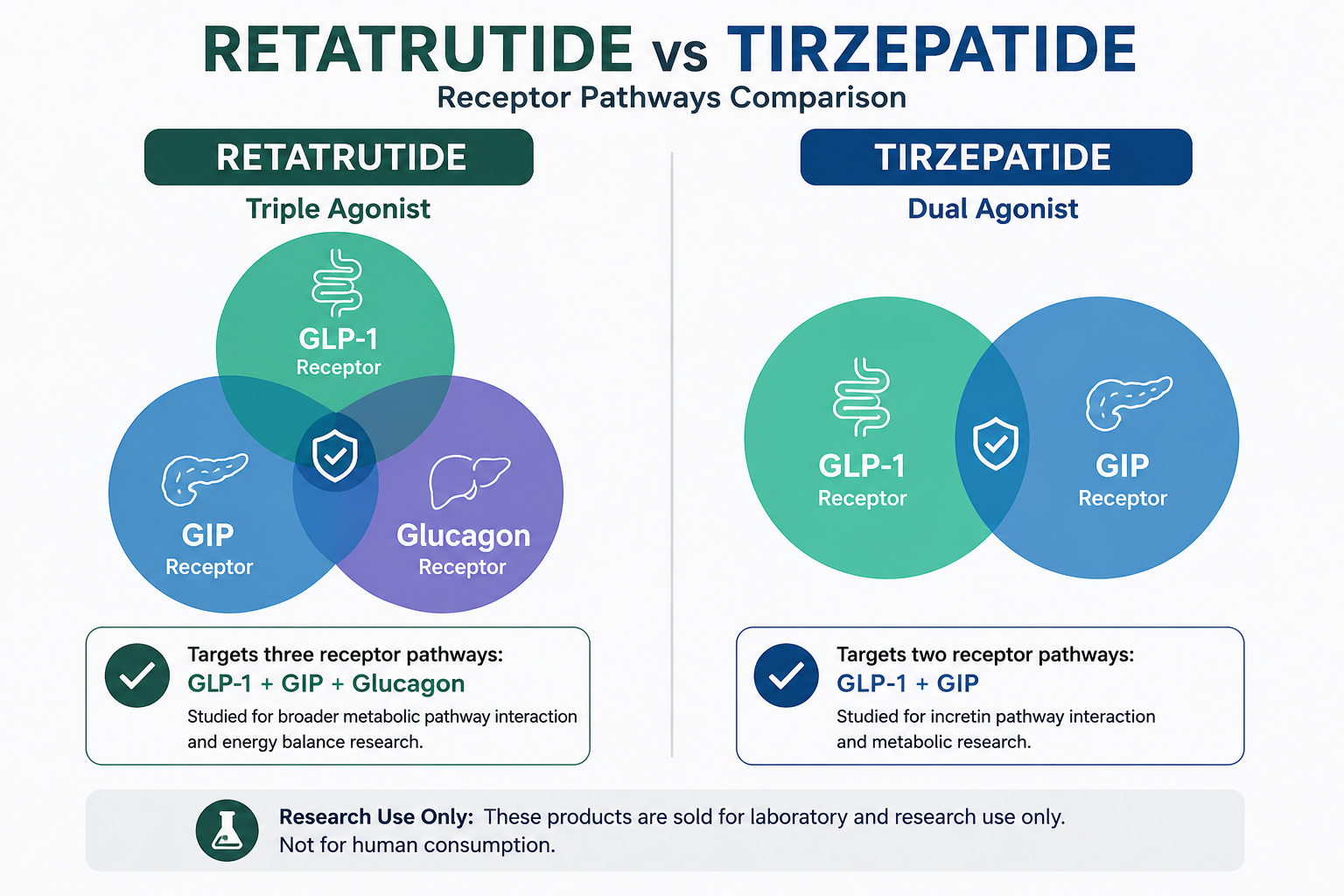
The key difference is simple: Tirzepatide is commonly described as a dual GIP and GLP-1 receptor agonist, while Retatrutide is studied as a triple agonist involving GIP, GLP-1, and glucagon receptor pathways. That third glucagon pathway is why Retatrutide is often called one of the most advanced next-generation metabolic research peptides.

Buy Retatrutide Canada Buy Retatrutide USA View Retatrutide Kits

Research-use notice: Royal Peptides products are sold for laboratory and research use only. Not for human consumption, medical use, diagnosis, treatment, or prevention of disease.

Quick Answer: Is Retatrutide the Same as Tirzepatide?

No. Retatrutide and Tirzepatide are not the same compound. They are frequently compared because both are studied in metabolic research, but they differ in receptor targeting. Tirzepatide is associated with GLP-1 and GIP receptor activity. Retatrutide is associated with GLP-1, GIP, and glucagon receptor activity.

This makes Retatrutide a broader triple-pathway research peptide, while Tirzepatide is a more established dual-pathway compound.

Shop research Retatrutide: Buy Retatrutide Canada | Buy Retatrutide USA

Table of Contents

Retatrutide vs Tirzepatide Comparison Table What Is Retatrutide? What Is Tirzepatide? Mechanism of Action: Dual vs Triple Agonist Why Researchers Compare Retatrutide and Tirzepatide Published Research Overview Body Composition Research Glucose and Metabolic Research Reconstitution and Storage Where to Buy Retatrutide in Canada and USA FAQ

Retatrutide vs Tirzepatide Comparison Table

The table below gives a high-level research comparison between Retatrutide and Tirzepatide. It is designed for readers who want a fast, clear breakdown before reading the deeper explanation below.

Category Retatrutide Tirzepatide
Research Type Triple hormone receptor agonist Dual incretin receptor agonist
Receptor Pathways GLP-1, GIP, and glucagon GLP-1 and GIP
Common Research Nickname Triple agonist Dual agonist
Main Research Interest Energy balance, body composition, metabolic pathway research Glucose regulation, appetite pathway, metabolic research
Research Novelty Newer and highly discussed due to glucagon receptor activity More established and widely studied
Why Researchers Compare It Broader receptor profile may create different research outcomes Strong dual incretin model for comparison
Royal Peptides Availability Available as research vials and kits depending on stock Available as research vials and kits depending on stock
Retatrutide vs Tirzepatide research comparison infographic

Retatrutide vs Tirzepatide: Key Research Differences

Retatrutide vs Tirzepatide remains one of the most discussed comparisons in metabolic peptide research. While both compounds involve GLP-1 and GIP receptor activity, Retatrutide vs Tirzepatide comparisons often focus on the addition of glucagon receptor activity found in Retatrutide.

Key takeaway: Retatrutide is studied as a triple agonist involving GLP-1, GIP, and glucagon pathways. Tirzepatide is studied as a dual agonist involving GLP-1 and GIP pathways.

What Is Retatrutide?

Retatrutide is a next-generation research peptide studied for activity across three hormone receptor pathways: glucose-dependent insulinotropic polypeptide, glucagon-like peptide-1, and glucagon. These are commonly shortened to GIP, GLP-1, and glucagon.

Because Retatrutide is associated with three receptor pathways rather than two, it is often described as a triple agonist. In metabolic research, this distinction is important. GLP-1 and GIP pathways are already heavily studied in incretin-based research. Retatrutide adds glucagon receptor activity, which gives researchers another pathway to examine when studying energy balance and metabolic models.

Retatrutide has become one of the most searched peptide research compounds because it represents a newer class of metabolic research agents. Researchers are interested in how its triple-pathway activity compares with more established dual agonists, especially Tirzepatide.

Why Retatrutide Gets So Much Attention

Retatrutide attracts attention because it combines three receptor targets into one compound. This allows researchers to study GLP-1, GIP, and glucagon pathway interaction in a single research model. For comparison-based research, this makes Retatrutide especially useful because it can be positioned against dual agonists such as Tirzepatide.

GLP-1 Pathway

Frequently studied for appetite signaling, gastric emptying models, and glucose-related metabolic pathways.

GIP Pathway

Studied for nutrient handling, insulin pathway interaction, and metabolic response models.

Glucagon Pathway

The extra pathway that separates Retatrutide from Tirzepatide in many research comparisons.

When someone searches “Retatrutide vs Tirzepatide,” they are usually trying to understand whether the addition of glucagon receptor activity makes Retatrutide meaningfully different. The answer is yes: from a research mechanism standpoint, Retatrutide has a broader receptor profile.

Where to buy Retatrutide: Researchers can view current Retatrutide options on the Buy Retatrutide USA page or the Buy Retatrutide Canada page.

What Is Tirzepatide?

Tirzepatide is a dual receptor agonist associated with GIP and GLP-1 receptor pathways. It is one of the most recognized compounds in metabolic peptide research because it helped popularize dual incretin pathway targeting.

Tirzepatide is commonly compared with Retatrutide because both are connected to GLP-1 and GIP receptor activity. The difference is that Tirzepatide does not include the same glucagon receptor agonist profile that makes Retatrutide a triple agonist.

Why Tirzepatide Is the Main Comparison Point

Tirzepatide is a natural comparison point because it is already well known in metabolic research. Researchers studying Retatrutide often want to understand whether the additional glucagon receptor pathway creates a different research profile from Tirzepatide’s dual agonist model.

In simpler terms, Tirzepatide is often viewed as the established dual agonist benchmark, while Retatrutide is viewed as the newer triple agonist comparison.

Question Simple Answer
Does Tirzepatide target GLP-1? Yes. GLP-1 receptor activity is part of Tirzepatide’s research profile.
Does Tirzepatide target GIP? Yes. GIP receptor activity is also part of Tirzepatide’s research profile.
Does Tirzepatide target glucagon? No. That is the key distinction often made when comparing it with Retatrutide.
Why compare it with Retatrutide? Because Retatrutide expands the research model from dual receptor activity to triple receptor activity.

Mechanism of Action: Dual Agonist vs Triple Agonist

The phrase “mechanism of action” refers to how a compound interacts with biological pathways in a research model. For Retatrutide and Tirzepatide, the mechanism comparison centers on receptor activity.

Tirzepatide: Dual GIP and GLP-1 Pathway Research

Tirzepatide is studied as a dual agonist. This means its research activity is focused around two pathways: GIP and GLP-1. These pathways are closely connected to incretin biology, glucose-related metabolic signaling, appetite pathway research, and nutrient handling.

Retatrutide: Triple GIP, GLP-1, and Glucagon Pathway Research

Retatrutide adds a third pathway: glucagon receptor activity. This is why Retatrutide is often described as a triple hormone receptor agonist. The addition of glucagon is the major difference between Retatrutide and Tirzepatide.

Retatrutide vs Tirzepatide receptor pathway comparison showing GLP-1 GIP and glucagon activity

Why the Glucagon Pathway Matters

Glucagon pathways are studied for their role in energy balance, hepatic glucose output, and metabolic rate models. In the context of Retatrutide research, glucagon receptor activity is often discussed as the feature that may create a different research profile from Tirzepatide.

This does not mean Retatrutide and Tirzepatide should be treated as interchangeable. They are different compounds with different receptor profiles.

Research distinction: Retatrutide and Tirzepatide should not be treated as interchangeable. Retatrutide has a triple receptor research profile, while Tirzepatide has a dual receptor research profile.

Why Researchers Compare Retatrutide and Tirzepatide

Researchers compare Retatrutide and Tirzepatide because both sit within the broader category of GLP-1 related metabolic peptide research. However, their receptor profiles are not identical. Tirzepatide provides a dual agonist model. Retatrutide provides a triple agonist model.

This comparison is useful for researchers examining:

1. Receptor Pathway Differences

Retatrutide includes glucagon receptor activity, while Tirzepatide is centered on GIP and GLP-1.

2. Metabolic Research Models

Both compounds are discussed in relation to energy balance, glucose pathways, and body composition models.

3. Research Potency Questions

Many searches ask whether Retatrutide is stronger than Tirzepatide, but the better answer is that it has a different receptor profile.

4. Next-Generation Peptide Research

Retatrutide is frequently searched because researchers are watching triple agonist compounds closely.

Although Retatrutide and Tirzepatide are often discussed together, they represent different approaches to metabolic peptide research. Tirzepatide is commonly described as a dual agonist involving GLP-1 and GIP pathways, while Retatrutide is studied as a triple agonist involving GLP-1, GIP, and glucagon pathways. Understanding this distinction is essential when comparing their research profiles.

Shop Retatrutide Research Peptides

Royal Peptides supplies Retatrutide research vials and kits for qualified laboratory research use.

Buy Retatrutide Canada Buy Retatrutide USA

Published Research Overview: Retatrutide vs Tirzepatide

Published studies have made both compounds important in metabolic research. Tirzepatide is widely discussed as an established dual agonist model involving GLP-1 and GIP pathways. Retatrutide is studied as a newer triple agonist model involving GLP-1, GIP, and glucagon pathways. Comparing the published research helps clarify why the two compounds are often discussed together, while still showing that they are not the same.

Retatrutide and Tirzepatide are both discussed in metabolic research, but they should not be described as identical. Tirzepatide is better known and more established. Retatrutide is newer and attracts attention because of its triple agonist design.

Research Point Retatrutide Tirzepatide
Research Stage Investigational compound with growing clinical research interest More established and widely discussed in metabolic studies
Receptor Activity GIP, GLP-1, and glucagon GIP and GLP-1
Key Research Theme Triple agonist metabolic pathway research Dual incretin pathway research
Why It Matters Broader receptor activity creates a different research profile Provides a strong benchmark for dual agonist comparison
Research perspective: Retatrutide and Tirzepatide are frequently compared because both involve GLP-1 and GIP receptor activity. The primary distinction is that Retatrutide also includes glucagon receptor activity, creating a broader triple agonist research profile.

Body Composition Research: Why Retatrutide Gets Compared to Tirzepatide

One of the main reasons Retatrutide is searched so heavily is its connection to body composition research. Tirzepatide already became a major comparison point in metabolic studies because of its dual GIP and GLP-1 receptor activity. Retatrutide builds on that research conversation by adding glucagon receptor activity.

Retatrutide Research Interest

Retatrutide is studied for how triple agonist activity may influence metabolic research models. The addition of glucagon receptor activity is especially important because glucagon is involved in energy balance and hepatic glucose output. This makes Retatrutide interesting in models where researchers are examining energy expenditure, body composition, and metabolic regulation.

Tirzepatide Research Interest

Tirzepatide is studied for dual incretin pathway activity. GLP-1 and GIP receptor pathways are connected to appetite signaling, insulin response, and glucose-related metabolic pathways. Because Tirzepatide is widely recognized, researchers often use it as a benchmark when learning about newer compounds such as Retatrutide.

Retatrutide vs Tirzepatide body composition research comparison
Body Composition Research Factor Retatrutide Tirzepatide
Appetite Pathway Research Studied through GLP-1, GIP, and glucagon pathway interaction Studied through GLP-1 and GIP pathway interaction
Energy Balance Research Strong interest due to glucagon receptor activity Strong interest through dual incretin pathways
Metabolic Research Profile Triple agonist model Dual agonist model
Research Visibility Growing interest in triple agonist models Established interest in dual agonist models

Glucose and Metabolic Pathway Research

Both Retatrutide and Tirzepatide are discussed in glucose and metabolic pathway research because both involve incretin-related receptor activity. GLP-1 and GIP pathways have been studied extensively in relation to insulin secretion, glucose handling, appetite signaling, and broader metabolic function.

Retatrutide introduces glucagon receptor activity into the comparison. That third pathway is what makes the compound especially interesting for researchers who want to compare dual agonist and triple agonist models.

GLP-1 Research

Commonly connected to appetite signaling, gastric emptying models, and glucose-related research.

GIP Research

Studied for nutrient response, metabolic signaling, and insulin pathway models.

Glucagon Research

Relevant to energy balance, liver glucose output, and metabolic rate research models.

Why Triple Agonist Research Draws Attention

Retatrutide is frequently discussed in metabolic research because it combines activity across three receptor pathways: GLP-1, GIP, and glucagon. This triple agonist profile allows researchers to examine how multiple metabolic signaling pathways interact within a single research model, making it a distinct point of comparison against dual agonist compounds.

Tirzepatide is commonly described as a dual agonist involving GLP-1 and GIP receptor pathways. Retatrutide expands on this framework by incorporating glucagon receptor activity, creating a broader receptor profile. As a result, researchers often compare the two compounds when evaluating differences in metabolic signaling, energy balance research, and body composition study models.

Retatrutide vs Tirzepatide: Research Profile Comparison

When comparing Retatrutide and Tirzepatide, it is important to focus on receptor activity, research design, and published findings. Both compounds are studied in metabolic research, but they differ in receptor coverage. Retatrutide is associated with GLP-1, GIP, and glucagon pathways, while Tirzepatide is associated with GLP-1 and GIP pathways. These differences help researchers evaluate distinct metabolic and body composition research models.

Research Discussion Area Retatrutide Tirzepatide
Receptor Coverage Broader triple-pathway profile Dual incretin pathway profile
Metabolic Modeling Useful for studying GLP-1, GIP, and glucagon interaction Useful for studying GLP-1 and GIP interaction
Body Composition Models High research interest because of triple agonist activity High research interest because of established dual agonist activity
Research Novelty Newer and more exploratory More established and better known
Research comparison Next-generation triple agonist research peptide Established dual agonist metabolic research peptide
Key Distinction: “Retatrutide has a broader triple receptor research profile compared with Tirzepatide’s dual receptor profile.”

Side Effect Research and Tolerability Discussion

Tolerability is another important area of comparison in metabolic peptide research. Both Retatrutide and Tirzepatide are discussed in clinical literature for their effects on incretin-related pathways, including gastrointestinal response, appetite signaling, and metabolic adaptation. Because their receptor profiles differ, researchers often evaluate how each compound may produce distinct tolerability patterns within study settings.

Because Retatrutide and Tirzepatide interact with incretin pathways, researchers often review tolerability data related to appetite, digestion, nausea-related reporting, and metabolic adaptation. Retatrutide’s glucagon receptor activity adds another layer of research interest.

Research Tolerability Topic Why It Is Studied
Gastrointestinal Reporting GLP-1 related compounds are often studied for nausea, digestion, and gastric emptying effects.
Appetite Signaling Both compounds are connected to appetite pathway research.
Metabolic Adaptation Researchers compare how different receptor profiles influence metabolic models.
Study Design Differences Dose, duration, model, and receptor profile can all affect research outcomes.

Reconstitution and Storage: Retatrutide and Tirzepatide Research Peptides

Retatrutide and Tirzepatide research peptides are commonly supplied in lyophilized powder form. Lyophilized peptides are freeze-dried to improve stability before reconstitution. In research settings, reconstitution should be performed using appropriate laboratory technique, proper labeling, and sterile handling protocols.

Royal Peptides supplies research products only. Any handling, storage, or reconstitution should be conducted by qualified researchers following institutional protocols.

Before Reconstitution

Keep lyophilized research peptides protected from heat, moisture, and unnecessary light exposure. Follow supplier storage instructions.

After Reconstitution

Clearly label research samples, store according to protocol, and avoid unnecessary temperature cycling or contamination risk.

Continue your research with our Peptide Calculator and Peptide Guide, two of the most popular resources available on Royal Peptides.

Storage and Handling Considerations

Proper storage and handling are important considerations when working with research peptides. Retatrutide and Tirzepatide are commonly supplied in lyophilized form and should be stored according to supplier recommendations and laboratory protocols. Maintaining appropriate storage conditions helps preserve peptide integrity and supports consistent research outcomes.

Retatrutide Research Peptide Kits

Royal Peptides offers Retatrutide research peptides in multiple vial strengths and kit configurations. Products are supplied as lyophilized research peptides intended for laboratory and research use only.

Retatrutide research peptide kit from Royal Peptides

Available options may include single vials, multi-vial kits, and wholesale quantities depending on inventory. Researchers can explore current availability through our dedicated Canada and USA Retatrutide pages.

Buy Retatrutide Canada Buy Retatrutide USA

Where to Buy Retatrutide in Canada and the USA

Researchers seeking Retatrutide can explore dedicated Canada and USA product pages for current availability, kit options, and product information. Royal Peptides offers a range of Retatrutide research products, including single vials, multi-vial kits, and wholesale quantities depending on inventory.

Buy Retatrutide Canada

Royal Peptides offers Retatrutide research products for Canadian researchers depending on current stock and availability.

Shop Retatrutide Canada

Buy Retatrutide USA

Royal Peptides offers Retatrutide research vials and kits for USA-based researchers depending on inventory and product selection.

Shop Retatrutide USA

Explore More Research Resources

Continue your research with additional resources, including Retatrutide product information, wholesale options, COA testing, peptide calculators, and educational guides.

Retatrutide Kits Single Vials Wholesale Peptides Peptide Calculator Peptide Guide COA FAQ

Retatrutide Research Peptides from Royal Peptides

Royal Peptides supplies premium research peptides, including Retatrutide kits, single vials, and wholesale options. Browse current availability for Canada and USA researchers below.

Buy Retatrutide Canada Buy Retatrutide USA

Retatrutide vs Tirzepatide FAQ

What is the main difference between Retatrutide and Tirzepatide?

Retatrutide is studied as a triple agonist targeting GLP-1, GIP, and glucagon pathways. Tirzepatide is studied as a dual agonist targeting GLP-1 and GIP pathways.

Is Retatrutide the same as Tirzepatide?

No. They are different compounds with different receptor profiles.

Why is Retatrutide called a triple agonist?

Because research discusses Retatrutide in relation to three receptor pathways: GLP-1, GIP, and glucagon.

Why is Tirzepatide called a dual agonist?

Because Tirzepatide is associated with two receptor pathways: GLP-1 and GIP.

Is Retatrutide stronger than Tirzepatide?

It is better to say Retatrutide has a broader triple receptor research profile. “Stronger” depends on study design, model, dose, duration, and research objective.

What receptors does Retatrutide target?

Retatrutide is studied for GLP-1, GIP, and glucagon receptor pathway activity.

What receptors does Tirzepatide target?

Tirzepatide is studied for GLP-1 and GIP receptor pathway activity.

Why does glucagon receptor activity matter?

Glucagon receptor activity is researched for energy balance, metabolic rate models, and hepatic glucose output.

Can researchers buy Retatrutide in Canada?

Yes. Royal Peptides offers Retatrutide research products for Canada depending on current inventory. Visit the Buy Retatrutide Canada page.

Can researchers buy Retatrutide in the USA?

Yes. Royal Peptides offers Retatrutide research products for USA researchers depending on current inventory. Visit the Buy Retatrutide USA page.

Does Royal Peptides sell Retatrutide kits?

Royal Peptides offers Retatrutide research vials and kits depending on stock availability.

Is Retatrutide for human use?

No. Royal Peptides products are sold for laboratory and research use only. They are not for human consumption.

Is Tirzepatide for human use?

Royal Peptides products are sold for laboratory and research use only. They are not intended for human consumption, diagnosis, treatment, or prevention of disease.

How should Retatrutide research peptides be stored?

Lyophilized research peptides should be stored according to supplier guidance and laboratory protocol, protected from heat, moisture, and contamination.

How should Tirzepatide research peptides be stored?

Storage should follow supplier instructions and qualified laboratory handling procedures.

What does lyophilized mean?

Lyophilized means freeze-dried. Many research peptides are supplied as a dry powder before reconstitution.

What is peptide reconstitution?

Reconstitution is the process of adding an appropriate solvent to a lyophilized research peptide under proper laboratory conditions.

Which peptide is better for research?

It depends on the research objective. Retatrutide is useful for triple agonist pathway research, while Tirzepatide is useful for dual incretin pathway research.

Why is Retatrutide popular in research?

Retatrutide is popular because it is associated with GLP-1, GIP, and glucagon receptor pathways, making it a major compound in next-generation metabolic research discussions.

Where can I buy Retatrutide for research?

Royal Peptides provides Retatrutide research products through its Canada and USA Retatrutide pages.

Final Comparison: Retatrutide vs Tirzepatide

Retatrutide and Tirzepatide are among the most discussed compounds in modern metabolic peptide research. While both are associated with GLP-1 and GIP receptor activity, Retatrutide is distinguished by the addition of glucagon receptor activity, giving it a broader triple agonist research profile.

Tirzepatide remains an important dual agonist model and serves as a common benchmark for comparison. Retatrutide builds upon that framework by incorporating a third metabolic pathway, making it a frequent subject of ongoing research and scientific discussion.

Understanding the differences between these compounds begins with receptor activity, research objectives, and study design. Although they are often discussed together, Retatrutide and Tirzepatide represent distinct approaches to metabolic pathway research and should not be viewed as interchangeable compounds.

When evaluating Retatrutide vs Tirzepatide, researchers typically compare receptor activity, study objectives, and metabolic pathway interaction. Retatrutide vs Tirzepatide discussions continue to grow as interest in triple agonist research expands.

Research summary: Tirzepatide is commonly described as a dual agonist involving GLP-1 and GIP pathways, while Retatrutide is studied as a triple agonist involving GLP-1, GIP, and glucagon pathways.

References

  1. New England Journal of Medicine – Triple-Hormone-Receptor Agonist Retatrutide for Obesity
  2. PubMed – GLP-1, GIP and Glucagon Receptor Research
  3. Eli Lilly – Retatrutide Clinical Development Program
  4. Jastreboff AM, et al. Tirzepatide Once Weekly for the Treatment of Obesity. New England Journal of Medicine.
  5. National Center for Biotechnology Information (NCBI). Glucagon Receptor Biology and Metabolic Regulation.
  6. National Center for Biotechnology Information (NCBI). GLP-1 Receptor Signaling and Metabolic Research.
  7. National Center for Biotechnology Information (NCBI). Glucose-Dependent Insulinotropic Polypeptide (GIP) Research.
  8. Eli Lilly and Company. Retatrutide Clinical Development Program.

References are provided for educational and research purposes only.

Shop Retatrutide Research Peptides

Browse Retatrutide research vials, kits, and bulk options from Royal Peptides.

Buy Retatrutide Canada Buy Retatrutide USA
INSIDER ACCESS

Restock Alerts, Private Drops & Insider Pricing

Join the Royal Peptides mailing list for high-demand restock alerts, subscriber-only offers, release updates, and priority access before inventory sells out.

Restock Alerts Early Access Exclusive Offers COA Updates
Join Mailing List No spam. Product updates only.
Royal Peptides

Royal Peptides supplies premium research peptides with a focus on purity, transparency, batch verification, and reliable fulfillment.

USA + Canada Shipping Third-Party Tested

Shop

  • Home
  • Shop Products
  • Wholesale
  • Peptide Calculator
  • COA Vault

Support

  • Track Order
  • FAQ / Help
  • Shipping & Returns
  • Terms of Service
  • Privacy Policy

Contact

  • info@royal-peptides.com
  • Text: 520-580-4100
  • Affiliates
  • Official Website Verification
Retatrutide vs Tirzepatide Research Guide
Research Use Only

For research and laboratory use only. Products listed on this website are intended strictly for in-vitro research and laboratory experimentation. They are not drugs, food additives, dietary supplements, or products intended for human or animal consumption.

Royal Peptides products are not intended for clinical use, therapeutic purposes, self-administration, or the treatment, cure, diagnosis, mitigation, or prevention of any disease or medical condition. By purchasing, you confirm legal eligibility, proper handling responsibility, and compliance with all applicable laws.

© 2026 Royal Peptides. All rights reserved. Verify Official Website
Royal Peptides
21+ Access Only

Restricted Research Access

This website is intended only for individuals 21 years of age or older accessing products for legitimate laboratory and research purposes.

By entering this site, you confirm you are at least 21 years old, located in a jurisdiction where access is lawful, and understand all products are sold strictly for research use only and not for human or veterinary consumption.
Please confirm the checkbox before entering.
Royal Peptides • USA Access • Research Use Only
Scroll to top
0