Copper Peptide Research Material
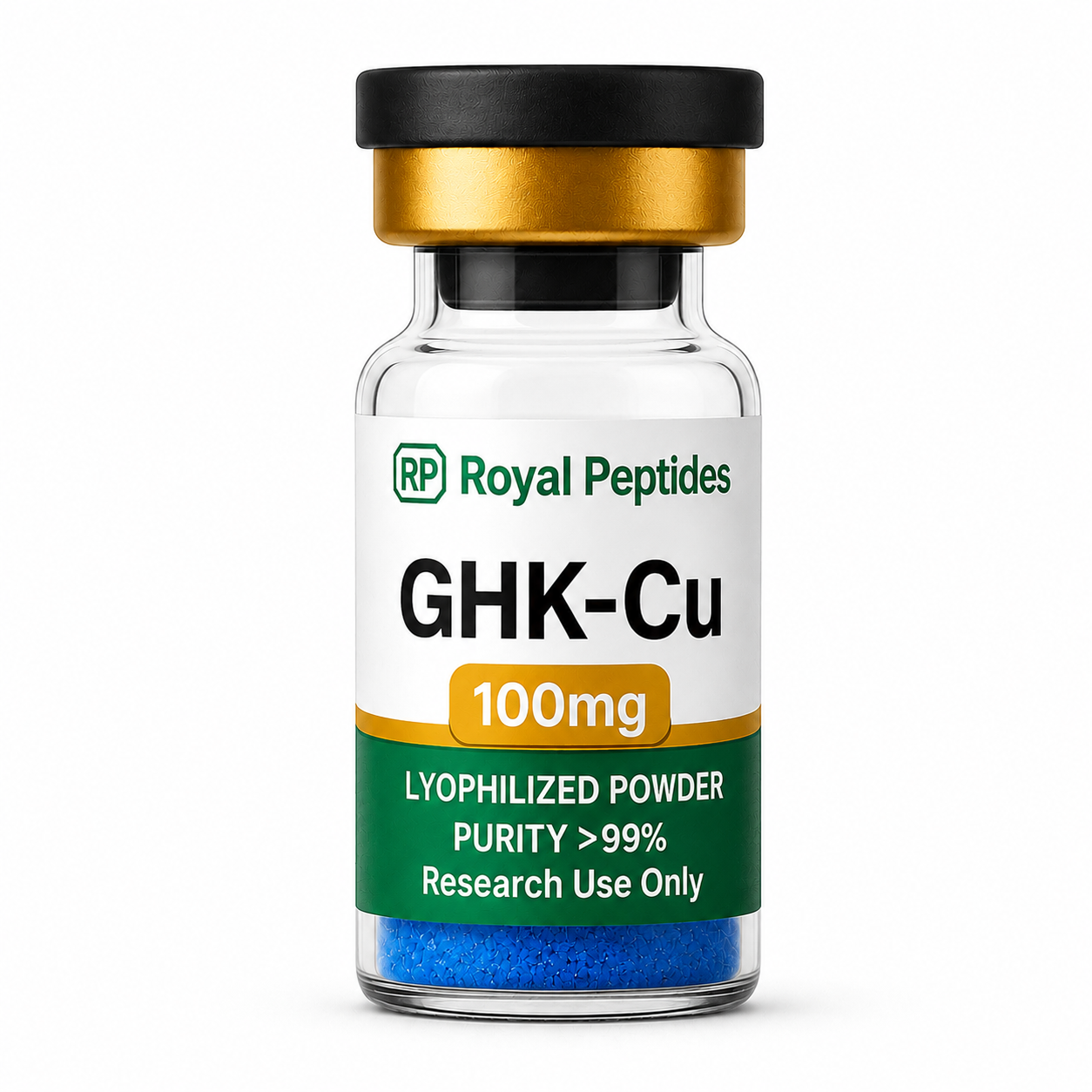
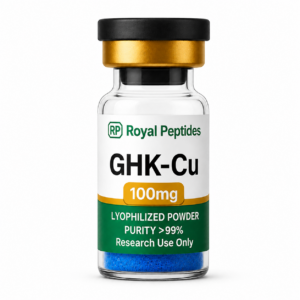
GHK-Cu Copper Peptide Research Material
GHK-Cu is the copper(II)-coordinated form of the tripeptide
glycyl-L-histidyl-L-lysine. It is studied in controlled
biochemical and molecular research involving peptide-metal
coordination, copper-binding chemistry, molecular interactions,
and peptide structure-function relationships.
GHK-Cu
Copper Peptide
Tripeptide Complex
Metal-Binding Research
Batch Traceability
Research Use Only
Not for human or veterinary use, administration, ingestion,
injection, compounding, diagnostic, therapeutic, clinical,
cosmetic, or personal use.
01
Compound Profile
GHK-Cu Research Material
GHK-Cu is a copper-peptide complex formed through coordination
of copper with the tripeptide GHK, whose amino-acid sequence is
glycine-histidine-lysine.
The defined peptide sequence together with its coordinated metal
ion provides a distinct molecular system for research involving
peptide chemistry, metal binding, complex formation, analytical
characterization, and molecular interactions.
Royal Peptides supplies GHK-Cu strictly as a laboratory research
material. Scientific information presented here describes compound
identity and areas of experimental investigation only.
02
Molecular Identification
Defined Copper–Tripeptide Complex
GHK-Cu combines a defined three-residue peptide with coordinated
copper. Researchers should distinguish between the underlying GHK
peptide and its copper-associated form when maintaining analytical
records and interpreting experimental data.
Compound
GHK-Cu
Copper peptide research material
Peptide Class
Tripeptide
Three amino-acid residues
Sequence
Gly-His-Lys
G • H • K
Coordination
Copper(II)
Peptide-metal complex
03
Molecular Composition
Glycine • Histidine • Lysine + Copper
The GHK peptide component contains three defined amino-acid residues.
Coordination with copper produces the research complex commonly
referred to as GHK-Cu.
G • Glycine
Glycine forms the first amino-acid residue within the
defined GHK peptide sequence.
H • Histidine
Histidine occupies the central position and contributes
functional groups relevant to metal-coordination chemistry.
K • Lysine
Lysine completes the three-residue peptide sequence and
contributes to the defined molecular identity of GHK.
Cu • Copper
Copper coordination creates the GHK-Cu complex and provides
an additional variable for peptide-metal interaction research.
04
Scientific Context
Controlled GHK-Cu Research
GHK-Cu appears in experimental literature involving peptide-metal
coordination, biochemical signaling, molecular interactions,
gene-expression research, and cellular research models. These
areas describe laboratory investigation and should not be interpreted
as intended therapeutic or consumer uses of this product.
Copper-Binding Chemistry
Controlled analytical systems may examine coordination between
the GHK peptide and copper under defined experimental conditions.
Peptide-Metal Interactions
GHK-Cu provides a defined molecular model for studying interactions
involving peptide ligands and coordinated metal ions.
Molecular Signaling Research
Experimental models may investigate measurable signaling
variables associated with the GHK-Cu complex.
Structure-Function Research
Researchers may compare GHK, GHK-Cu, and related materials to
examine how metal coordination affects measurable molecular
and analytical characteristics.
05
Analytical Documentation
Batch-Specific Research Information
Laboratory evaluation should rely on analytical documentation
corresponding to the specific GHK-Cu production lot under
investigation. General product-page information should not
replace applicable batch-specific records.
- Compound identification
- Production lot or batch reference
- Declared material quantity
- Analytical testing information
- Purity information where applicable
- Testing methodology where documented
- Certificate of Analysis information where available
- Research material traceability
06
Traceability
Research Records & Lot Control
Appropriate laboratory records help maintain traceability
between experimental observations and the specific GHK-Cu
production lot incorporated into a research workflow.
Material Identification
Record the compound identity, stated material quantity,
applicable production lot or batch reference, date received,
and relevant internal laboratory identifier.
Analytical Records
Preserve applicable analytical documentation, experimental
observations, results, storage records, and other research
records associated with the material.
07
Laboratory Protocol
Handling & Storage
GHK-Cu research material should be handled using appropriate
laboratory procedures designed to preserve material identity,
minimize contamination, and maintain experimental traceability.
Professional Laboratory Handling
Handle using appropriate laboratory practices and equipment.
Maintain clear material identification throughout receipt,
storage, analytical preparation, and experimental workflows.
Storage & Records
Follow storage information associated with the applicable
product label and batch documentation. Maintain appropriate
laboratory storage and material-control records.
08
Important Restrictions
Research Use Limitations
Royal Peptides GHK-Cu is supplied exclusively as a laboratory
research material. It is not offered or represented as a medicine,
pharmaceutical preparation, dietary supplement, food, cosmetic,
personal-care ingredient, or consumer health product.
- Not for human administration
- Not for veterinary administration
- Not for ingestion or injection
- Not for topical or cosmetic use
- Not for personal experimentation
- Not for pharmaceutical compounding
- Not for diagnostic or therapeutic use
- Not for clinical use
09
Research FAQ
GHK-Cu Research Questions
What is GHK-Cu?
GHK-Cu is the copper-coordinated form of the tripeptide
glycyl-L-histidyl-L-lysine. Royal Peptides supplies it
strictly as a laboratory research material.
What does GHK stand for?
GHK identifies the three amino-acid residues glycine,
histidine, and lysine using their standard one-letter
abbreviations.
Is GHK-Cu a peptide?
GHK itself is a tripeptide. GHK-Cu is the corresponding
copper-peptide complex formed when the GHK peptide coordinates
copper.
What is the GHK peptide sequence?
GHK consists of glycine-histidine-lysine, commonly written
as Gly-His-Lys.
What is the difference between GHK and GHK-Cu?
GHK refers to the three-residue peptide itself, while GHK-Cu
refers to the peptide in a copper-coordinated form. Researchers
should distinguish these materials when documenting compound
identity and analytical results.
What research areas involve GHK-Cu?
Experimental research involving GHK-Cu includes peptide-metal
coordination, copper-binding chemistry, molecular interactions,
signaling pathways, gene-expression research, and controlled
cellular models. These are research contexts rather than
intended uses of this product.
Is GHK-Cu intended for cosmetic or topical use?
No. The GHK-Cu material sold by Royal Peptides is supplied
strictly as a laboratory research material and is not intended
as a cosmetic, skin-care ingredient, topical preparation, or
personal-use product.
Is GHK-Cu intended for human use?
No. Royal Peptides supplies GHK-Cu strictly for laboratory
research. It is not intended for human or veterinary use
or administration.
Does Royal Peptides provide dosing or administration instructions?
No. Royal Peptides does not provide dosing, administration,
injection, topical-use, prescribing, treatment, or personal-use
instructions for GHK-Cu.
Why is the production lot important?
Batch-specific analytical documentation corresponds to a
particular production lot. Recording the applicable lot
reference supports traceability between the research material,
analytical documentation, and laboratory records.
Is analytical documentation available?
Batch-specific analytical documentation may be available
for the applicable production lot. Researchers should review
documentation corresponding to the specific material received.
Research Use Only
Laboratory Copper-Peptide Research Material
GHK-Cu is supplied for laboratory research use only. Not for human
or veterinary use. Not intended for administration, ingestion,
injection, topical or cosmetic application, personal experimentation,
pharmaceutical compounding, pharmacy preparation, diagnostic use,
therapeutic use, or clinical use. Nothing on this page constitutes
medical advice or represents this research material as intended to
diagnose, treat, cure, mitigate, or prevent any disease or medical
condition.



 GHK-Cu Copper Peptide