20% off all GLPs — sale prices already appliedFree shipping over $300 · USA domesticYou are on the official Royal Peptides website — verify the link3rd-party verified COAs · Same-day shipping
✓ Verify official site
My account
Oxytocin 10mg
Make a vial labelFree printable label for NIIMBOT & Phomemo
Research use only Laboratory research materials

Royal Peptides products are offered exclusively for laboratory research, analytical and scientific applications. Not for human or veterinary use.

01Research product information

Royal Peptides supplies compounds intended for controlled laboratory research and analytical applications.

  • For research and analytical use only
  • Not intended for human consumption or administration
  • Not intended for veterinary use
  • Not represented as a drug, medicine or therapeutic product
  • Laboratory researchers are responsible for appropriate protocols and controls

Research onlyLaboratory materialAnalytical use

02Lyophilized product format

Where applicable, Royal Peptides research materials are supplied in lyophilized form. Lyophilization is a freeze-drying process used to remove moisture from material under controlled conditions.

  • Material appearance may differ between compounds and production lots
  • Lyophilized material may appear as a cake, film or fragmented material
  • The quantity of visible material may appear small relative to vial size
  • Visual appearance alone does not establish identity or purity
03Storage & laboratory handling

Storage requirements may vary by compound, formulation and production lot. Refer to the product label and available product-specific documentation.

  • Protect research materials from excessive heat
  • Limit unnecessary exposure to direct light and moisture
  • Keep containers securely closed when stored
  • Follow product-specific temperature requirements when provided
  • Use appropriate laboratory contamination-control procedures
04Packaging & quality documentation

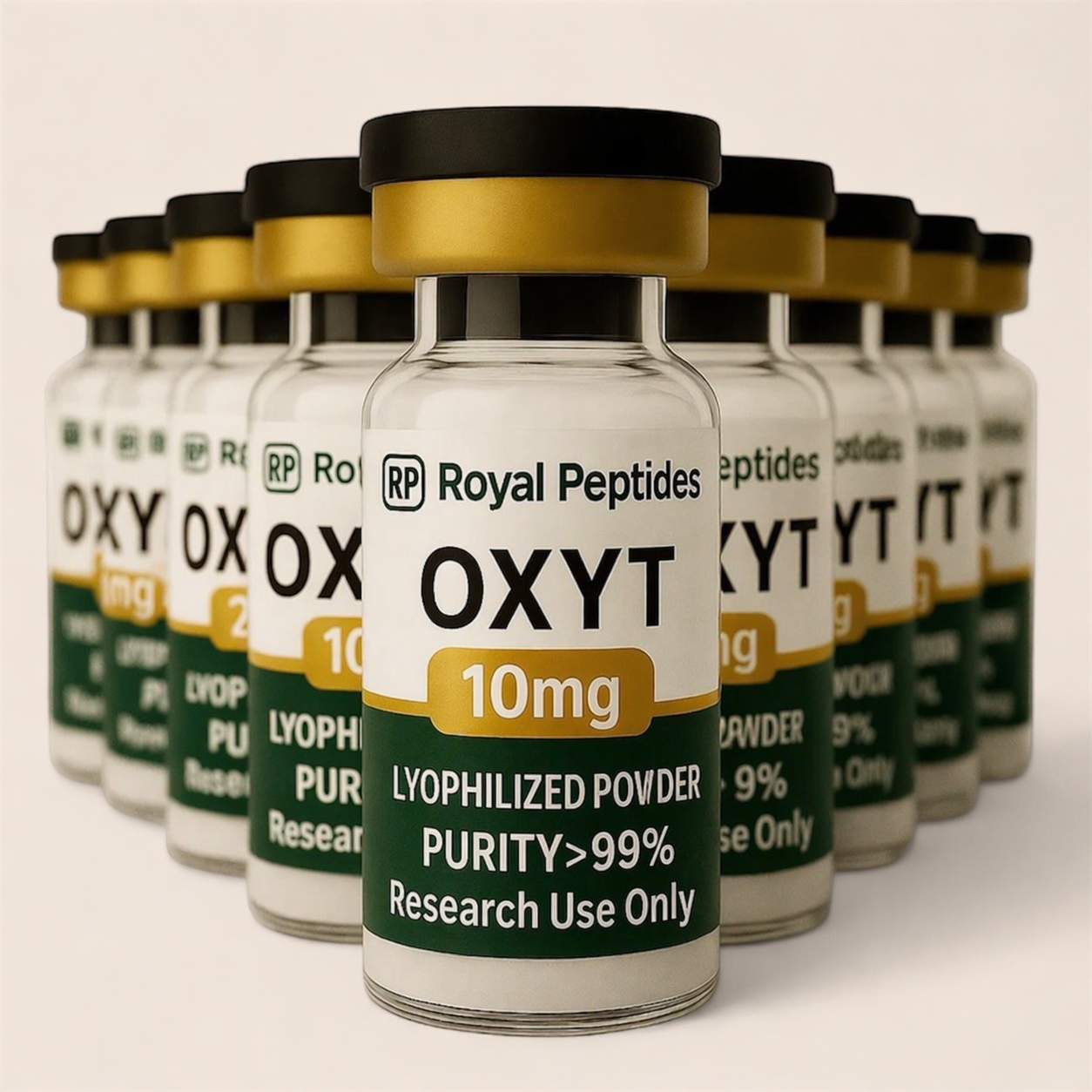
Packaging components may vary slightly between production lots. This can include vial closures, cap styles, label positioning and external packaging.

  • Check the product label and lot identifier before laboratory use
  • Inspect the vial and closure for visible shipping damage
  • Packaging design may differ between batches
  • Lot-specific analytical documentation may be available in our COA library

View COA library →

Healing & Growth In stock

Oxytocin 10mg

Price range: $70.00 through $560.00
$5.60/mg
Buy more · save morePick a bundle
Lowest price 10vial kit Shop kits View →
  

Please review before orderingImportant product notice
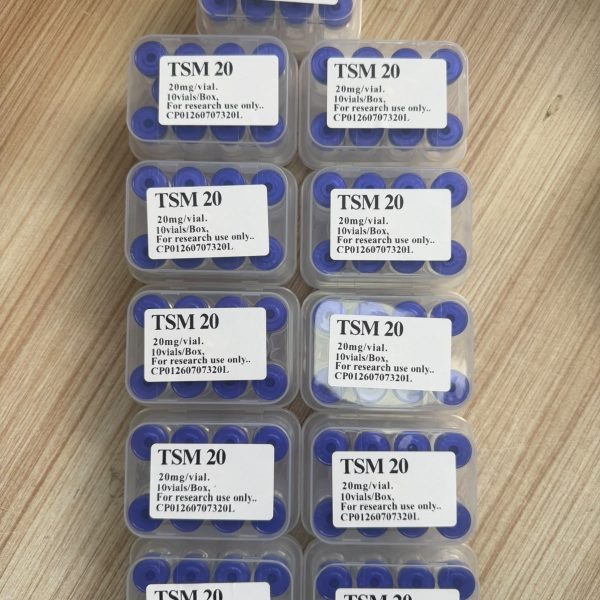
10-vial kits — vials are not individually labeled
10-vial research kits are supplied without individual vial labels. Product and batch identification are provided with the kit packaging.
Reconstitution materials
For reconstitution-related research, use Royal Peptides® Reconstitution Solution ↗ or a genuine manufacturer-sealed Hospira® / Pfizer® product where applicable.
Support notice
Support may be limited when unverified third-party materials are used.
Third-party testedBatch COA on file
Same-day shippingOn in-stock orders
Discreet & securePlain packaging

Research noticeFor laboratory and research purposes only. Not intended for human consumption, diagnostic or therapeutic use, or administration to humans or animals.

Neuroendocrine Research Peptide

Oxytocin 10mg Research Peptide

Oxytocin 10mg is a research peptide supplied for laboratory investigation of oxytocin receptor signaling, neuroendocrine communication and peptide-mediated cellular pathways. Oxytocin is an endogenous cyclic nonapeptide composed of nine amino acid residues and is one of the most extensively characterized signaling peptides in mammalian physiology.

Oxytocin OXT 10mg 9-Amino-Acid Peptide Research Use Only
Compound Oxytocin
Content 10mg
Peptide Length 9 Amino Acids
Research Target Oxytocin Receptor

What Is Oxytocin?

Oxytocin is an endogenous peptide hormone and neuropeptide synthesized as part of a larger precursor protein. The biologically active molecule is a compact nine-amino-acid cyclic peptide.

Oxytocin is particularly important to biochemical research because its effects are mediated primarily through the oxytocin receptor (OXTR), a member of the G-protein-coupled receptor family.

Activation of OXTR can initiate intracellular signaling cascades, making the oxytocin system a useful experimental model for studying receptor activation, calcium-associated signaling, neuroendocrine communication and peptide-receptor interactions.

Oxytocin and its receptor are studied across numerous areas of neuroscience, endocrinology, molecular biology and cellular signaling research.

Molecular Research

Oxytocin Structure & Peptide Biology

Oxytocin is a cyclic nonapeptide. Its compact structure contains a disulfide bridge between two cysteine residues, producing the characteristic cyclic portion of the molecule.

The peptide's relatively small size and well-characterized receptor system have made oxytocin an important model compound for investigating how peptide structure influences receptor recognition and downstream cellular signaling.

Peptide Class

Cyclic Nonapeptide

Oxytocin consists of nine amino-acid residues with a disulfide-linked cyclic structure.

Primary Receptor

OXTR

The oxytocin receptor provides a defined molecular target for peptide-receptor signaling experiments.

Oxytocin Receptor Signaling Research

The oxytocin receptor is a G-protein-coupled receptor whose activation can influence intracellular signaling pathways, including pathways associated with phospholipase C and intracellular calcium.

Researchers use this system to examine how extracellular peptide signals are translated into intracellular responses.

OXTR Signaling Investigation of ligand binding and oxytocin-receptor activation.
GPCR Biology Research involving G-protein-coupled receptor signaling mechanisms.
Calcium Signaling Experimental study of downstream intracellular signaling associated with receptor activation.

Neuroendocrine Research

Oxytocin occupies an unusual position at the intersection of neuroscience and endocrine biology. It is therefore frequently investigated as a model of neuroendocrine signaling.

Laboratory research has examined oxytocin-associated systems in relation to neuronal communication, receptor distribution, peptide release, feedback mechanisms and interactions between the nervous and endocrine systems.

These investigations help researchers characterize how peptide messengers can influence signaling across different tissues and biological systems.

Oxytocin Research Areas

Neuropeptide Biology Investigation of peptide-mediated communication within experimental neural systems.
Neuroendocrine Signaling Research into communication between neural and endocrine pathways.
Receptor Pharmacology Laboratory characterization of OXTR binding and activation.
Cellular Signaling Investigation of intracellular pathways initiated following receptor activation.
Peptide Structure Research into the relationship between cyclic peptide structure and biological signaling.
Receptor Distribution Experimental investigation of oxytocin-receptor expression and localization.

Oxytocin 10mg Research Specifications

Compound Oxytocin
Content 10mg
Abbreviation OXT
Peptide Length 9 Amino Acids
Structural Class Cyclic Nonapeptide
Primary Research Target Oxytocin Receptor (OXTR)

Why Is Oxytocin Studied?

Oxytocin provides researchers with a particularly useful model for studying peptide-receptor communication.

Its defined nine-amino-acid structure, characterized receptor and extensive scientific literature allow investigators to examine relationships between peptide structure, receptor binding and intracellular signaling.

Its role as an endogenous signaling molecule also makes the oxytocin/OXTR system relevant to broader investigation of neuroendocrine biology and intercellular communication.

Oxytocin 10mg FAQ

What is Oxytocin?

Oxytocin is an endogenous cyclic nonapeptide that functions as a neuropeptide and peptide hormone and is widely investigated in neuroendocrine and receptor-signaling research.

How many amino acids are in Oxytocin?

Mature oxytocin consists of nine amino-acid residues, which is why it is classified as a nonapeptide.

What receptor does Oxytocin interact with?

Oxytocin primarily interacts with the oxytocin receptor, commonly abbreviated OXTR, which belongs to the G-protein-coupled receptor family.

Why is Oxytocin used in laboratory research?

Oxytocin is studied as a model for neuropeptide biology, neuroendocrine communication, receptor pharmacology and intracellular signaling.

What is the strength of this Oxytocin research product?

This research product contains 10mg of Oxytocin per vial.

Is Oxytocin 10mg intended for human use?

No. This product is supplied strictly for laboratory and research purposes and is not intended for human or veterinary use.

For Research Use Only Oxytocin 10mg is supplied strictly for laboratory, analytical and research purposes. It is not intended for human or veterinary use, consumption, diagnosis, treatment, prevention or mitigation of any disease or medical condition. References to receptors, neuroendocrine pathways, cellular signaling or physiological systems describe areas of scientific investigation and do not constitute therapeutic claims.

Research specifications

Amino acid sequence & breakdown
Standard residueModified residueConjugation site
9-residue breakdown
Disulfide bond Cys1–Cys6; C-terminal glycinamide; schematic sequence only.
Chemical structure2D chemical structure reference for Oxytocin
View verified structure source
PubChem CID439302
Also known asPitocin, Endopituitrina, Syntocinon
SequenceCYIQNCPLG
Sequence / chemistry notesDisulfide bond Cys1–Cys6; C-terminal glycinamide; schematic sequence only.
Molecular formulaC43H66N12O12S2
Molecular weight1007.2 g/mol
CAS number50-56-6
Purity specification≥99%
FormLyophilized powder
StorageStore at −20°C