Pan-ERR Research • 2026 Reference
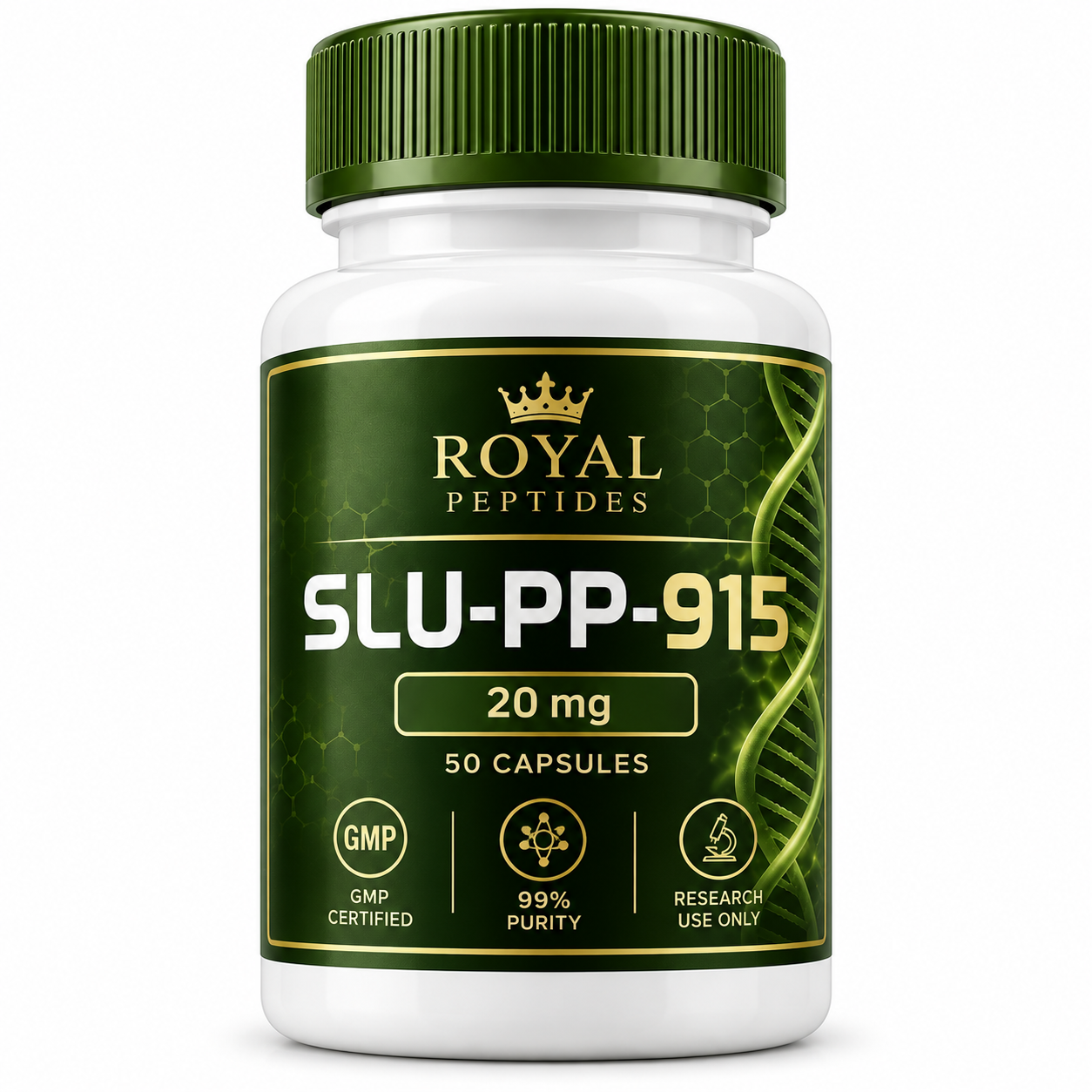
SLU-PP-915 Research Compound
SLU-PP-915 is a chemically distinct synthetic small-molecule
pan-estrogen-related receptor agonist investigated across
ERRα, ERRβ and ERRγ. Published preclinical research has examined
its oral bioavailability, mitochondrial and metabolic signaling,
ERR-regulated gene expression and exercise-associated biology.
Pan-ERR Agonist
ERRα / ERRβ / ERRγ
Small Molecule
Orally Bioavailable in Mice
Mitochondrial Research
Research Use Only
Compound Class
Synthetic Small Molecule
Research Targets
ERRα / ERRβ / ERRγ
Pharmacology
Pan-ERR Agonist
Research Status
Preclinical
What Is SLU-PP-915?
SLU-PP-915 is an experimental synthetic small molecule identified
during medicinal-chemistry research into potent agonists of the
estrogen-related receptor family.
The compound belongs to a chemical series of
2,5-disubstituted thiophenes investigated for
estrogen-related receptor activity. SLU-PP-915 contains a
boronic-acid moiety and was characterized as a
potent pan-ERR agonist with activity across ERRα, ERRβ and ERRγ.
SLU-PP-915 is not a peptide. It is a chemically
distinct small-molecule research compound developed after earlier
work involving experimental ERR agonists such as SLU-PP-332.
How Does SLU-PP-915 Work in Research Models?
Estrogen-related receptors are nuclear receptors involved in the
transcriptional regulation of genes associated with cellular energy
metabolism. SLU-PP-915 is used experimentally to investigate the
effects of pharmacological activation of this receptor family.
SLU-PP-915
ERRα / ERRβ / ERRγ
ERR-Regulated Gene Expression
Metabolic & Mitochondrial Research
Published medicinal-chemistry research reported significant
upregulation of established ERR target genes following experimental
exposure to SLU-PP-915, including genes relevant to metabolic and
exercise-associated signaling.
SLU-PP-915 Research Areas
SLU-PP-915 has been investigated across several interconnected areas
of nuclear-receptor, metabolic and mitochondrial research.
01
Pan-ERR Signaling
Experimental investigation of agonist activity across
estrogen-related receptors ERRα, ERRβ and ERRγ.
02
Mitochondrial Biology
Research involving ERR-regulated pathways associated with
mitochondrial biogenesis, oxidative phosphorylation and
cellular energetics.
03
Skeletal-Muscle Research
Preclinical investigation of ERR activation, muscle gene
expression and biological responses associated with aerobic
exercise.
04
Oral Activity
Later preclinical work demonstrated biological activity
following oral administration of SLU-PP-915 in mouse models.
SLU-PP-915 and Oral Bioavailability
One of the most important research characteristics distinguishing
SLU-PP-915 from the earlier SLU-PP-332 compound is its
oral bioavailability in preclinical mouse research.
Published 2026 research characterized SLU-PP-915 as a chemically
distinct ERR pan-agonist that maintained biological efficacy
following oral administration in mice when systemic exposure was
taken into account.
SLU-PP-332
Lacks oral bioavailability in the published model
SLU-PP-915
Oral bioavailability demonstrated in mice
!
Preclinical distinction:
oral bioavailability or biological activity in mice does not
establish human oral pharmacokinetics, efficacy, dosing or
safety.
SLU-PP-915 Chemistry and Development
The medicinal-chemistry program that produced SLU-PP-915 explored a
new series of 2,5-disubstituted thiophenes designed as potent
estrogen-related receptor agonists.
Researchers found that phenolic or aniline groups within the
chemical series could be replaced with a
boronic-acid moiety while maintaining ERR activity.
Compounds containing this structural feature demonstrated improved
metabolic stability in experimental microsomal assays compared with
corresponding aniline or phenol compounds.
SLU-PP-915 emerged as one of the potent compounds from this series
and was subsequently investigated in gene-expression and in-vivo
experiments.
SLU-PP-915 and ERR-Regulated Gene Expression
Published medicinal-chemistry research investigated whether
SLU-PP-915 could influence established transcriptional targets of
estrogen-related receptor signaling.
In experimental models, SLU-PP-915 significantly upregulated several
ERR-associated genes, including
PGC-1α, LDHA, DDIT4 and PDK4.
These findings are relevant to the study of ERR-controlled
transcriptional networks associated with mitochondrial biology,
energy metabolism and exercise-associated cellular responses.
i
Classification:
SLU-PP-915 is most precisely described as a pan-ERR agonist.
Changes in PGC-1α expression observed experimentally should not
be confused with describing PGC-1α as the compound's direct
receptor target.
Why Is SLU-PP-915 Studied as an Exercise Mimetic?
ERRα, ERRβ and ERRγ participate in transcriptional programs
associated with mitochondrial function and cellular energy
metabolism. These pathways also contribute to skeletal-muscle
adaptation to aerobic exercise.
In mouse research, SLU-PP-915 was investigated for its ability to
influence exercise-associated gene expression and aerobic exercise
capacity. The published work reported increased running distance and
duration in the experimental model.
Researchers also examined expression of
DNA damage-inducible transcript 4 (Ddit4), an
exercise-responsive gene, and reported that SLU-PP-915 could further
influence exercise-associated transcriptional responses when studied
alongside exercise training.
!
Research terminology:
“exercise mimetic” describes an experimental research concept.
Animal exercise-capacity findings do not establish comparable
effects or clinical outcomes in humans.
SLU-PP-915 and Mitochondrial Research
Estrogen-related receptors regulate transcriptional programs
involved in mitochondrial biogenesis, oxidative
phosphorylation, fatty-acid oxidation and cellular energy
metabolism.
This connection between ERR signaling and cellular energetics is a
major reason SLU-PP-915 is being investigated as an experimental
chemical tool in metabolic, mitochondrial and exercise-associated
research.
The published literature remains preclinical. Findings from
cell-based and animal models do not establish human therapeutic
efficacy or safety.
SLU-PP-915 Metabolism Research
Research published in 2026 further characterized SLU-PP-915 using
liquid chromatography–high-resolution tandem mass spectrometry and
in-vitro metabolic systems involving human liver S9 fractions and
human liver microsomes.
Researchers identified seven Phase-I transformation
products for SLU-PP-915 in the experimental systems
studied. Three selected metabolites were additionally confirmed
through chemical synthesis and nuclear magnetic resonance analysis.
These findings contribute to analytical characterization and
metabolite identification. In-vitro liver-derived systems do not
establish human clinical pharmacokinetics or safety.
Research Comparison
SLU-PP-915 vs SLU-PP-332
Explore the differences in chemistry, ERR pharmacology,
oral bioavailability, metabolism and published preclinical
evidence.
SLU-PP-915 Research FAQ
What is SLU-PP-915?
SLU-PP-915 is an experimental synthetic small molecule
characterized in published research as a pan-estrogen-related
receptor agonist.
Is SLU-PP-915 a peptide?
No. SLU-PP-915 is a synthetic small molecule rather than a
peptide.
What receptors does SLU-PP-915 target?
Published research characterizes SLU-PP-915 as a pan-ERR agonist
with activity across ERRα, ERRβ and ERRγ.
Is SLU-PP-915 orally bioavailable?
Published preclinical research reports oral bioavailability and
biological activity for SLU-PP-915 in mice. This does not
establish human oral pharmacokinetics or clinical use.
What is the difference between SLU-PP-915 and SLU-PP-332?
They are chemically distinct pan-ERR agonists. One important
published distinction is that SLU-PP-915 demonstrated oral
bioavailability in mouse research, whereas lack of oral
bioavailability was identified as a limitation of SLU-PP-332.
Why is SLU-PP-915 called an exercise mimetic?
Preclinical studies have investigated whether pharmacological
ERR activation can reproduce selected molecular responses
associated with aerobic exercise. The term describes a research
concept and does not establish that the compound substitutes for
physical exercise in humans.
Has SLU-PP-915 demonstrated human clinical efficacy?
The published evidence discussed here is preclinical. Animal and
laboratory findings do not establish human clinical efficacy,
dosing or safety.
Published SLU-PP-915 Research
-
Hampton CS, et al. (2023).
Development and pharmacological evaluation of a new chemical
series of potent pan-ERR agonists, identification of SLU-PP-915.
European Journal of Medicinal Chemistry.
PubMed →
-
Billon C, et al. (2026).
An orally active estrogen receptor-related receptor agonist,
SLU-PP-915, enhances aerobic exercise capacity.
Journal of Pharmacology and Experimental Therapeutics.
PubMed →
-
Möller GM, et al. (2026).
In Vitro Metabolism and Analytical Characterization of
SLU-PP-332 and SLU-PP-915: Novel Pan-ERR Agonists With
Doping Potential.
Rapid Communications in Mass Spectrometry.
PubMed →
Research Use Only:
SLU-PP-915 is an experimental research compound. This material
and the information presented here are intended for laboratory
research and scientific-reference purposes only. Published
cell-based and animal findings do not establish human dosing,
efficacy or safety. Not for human consumption.